

Your cat jumped onto the counter, slipped through something sticky, and now has a coat full of grease, dust, or mystery goo. You’re standing in the bathroom with a wet towel in one hand and the nearest bottle of shampoo in the other. In that moment, it’s very tempting to think soap is soap.
It isn’t.
Cats aren’t tiny dogs, and they definitely aren’t furry people. A product that seems gentle to you can irritate a cat’s skin, leave behind residues they swallow while grooming, or expose them to ingredients their body can’t handle safely. That’s why choosing a shampoo safe for cats isn’t just about getting them clean. It’s about avoiding a problem that can get worse after the bath is over.
The confusing part is that many bottles look reassuring. They say things like “natural,” “gentle,” “botanical,” or “for pets.” Those words don’t always tell you what you need to know. The answer is usually on the ingredient list and in whether the product was made specifically for feline skin.
Table of Contents
- Your Cat Is a Mess What Should You Do First
- Why Human and Dog Shampoos Are Dangerous for Cats
- Decoding the Ingredient List of Cat Shampoos
- How to Choose a Genuinely Safe Cat Shampoo
- The Right Way to Bathe Your Cat with Less Stress
- Emergency Guide What to Do If You Used the Wrong Shampoo
- Frequently Asked Questions About Cat Shampoo
Your Cat Is a Mess What Should You Do First
A common version of this happens fast. Your cat gets stool on the back legs, knocks over cooking oil, or comes home with something tacky in the fur. You don’t have a cat shampoo in the house. The dog shampoo is under the sink. Your own baby shampoo looks mild. The dish soap seems strong enough to cut through anything.
Pause before you reach for any of them.
The first job isn’t “give a bath.” The first job is to figure out what is on the coat and if your cat needs a full wash. If it’s dry dirt, dried food, or a little litter dust, a damp cloth and careful combing may be enough. If it’s something potentially harmful, especially a flea product or chemical residue, the response needs to be more deliberate. If you’re dealing with parasites, it also helps to understand other feline-safe options like flea spray choices made for cats.
Start with three quick questions
What got on the fur
If you know the substance, you can make a safer decision. Mud and gravy are different from motor oil or a dog flea shampoo.How much of the body is affected
A dirty paw can often be spot-cleaned. A full-body coating of something greasy is different.Is your cat already licking it
Cats don’t wait politely after a mess. They start grooming, which turns a skin problem into a mouth and stomach problem too.
Practical rule: If you don’t know whether a product is cat-safe, don’t “just use a little.” A small amount of the wrong ingredient can still matter when a cat licks it off later.
If your cat is stable and the mess isn’t toxic, use a warm damp washcloth first. Trim away badly soiled fur if needed and if your cat allows it safely. Many cats never need a full sudsy bath for routine messes.
That’s the key shift. Don’t start with the bottle. Start with the cat, the substance, and the safest minimal cleanup that works.
Why Human and Dog Shampoos Are Dangerous for Cats
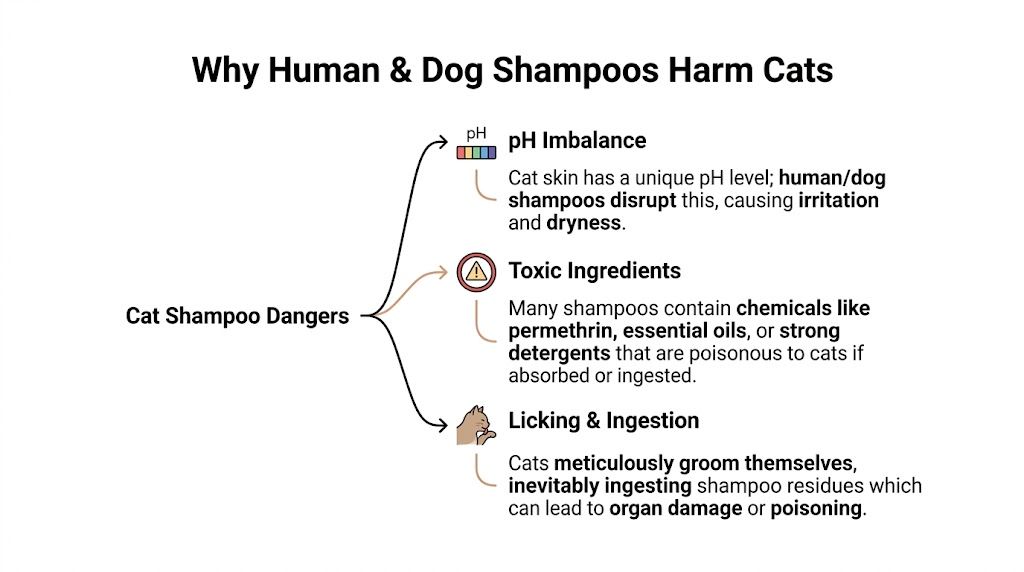
The reason is simple. Cats process skin products differently than we do. The wrong shampoo can irritate the skin barrier, absorb more easily than owners expect, and leave behind residues a cat will swallow during grooming.
Your cat’s skin is built differently
A cat’s skin is only about 0.4–0.6 mm thick, compared with 1.0–1.5 mm in dogs and about 2 mm in humans, according to this review on what shampoo is safe to use on cats. That thin barrier is one reason cats are more vulnerable to irritation and absorption.
The pH is different too. Cat skin sits around 6.2 to 7.0, while human skin is more acidic at 5.5, according to the same feline shampoo safety review. If you wash a cat with a human shampoo, you can disturb that balance and trigger dryness, irritation, and damage to the protective outer layer.
Think of skin pH like the right soil for a plant. If a plant needs one kind of soil and you dump in something much more acidic, it may survive, but it won’t be comfortable or healthy. Your cat’s skin barrier works the same way.
Cats lick the evidence
A dog may shake off after a bath and move on. A cat bath doesn’t end when the towel comes out. Cats groom. They lick paws, chests, sides, and tails. Anything left on the fur is likely to end up in the mouth.
That’s what confuses many owners. A shampoo can look fine on the skin at first and still be a poor choice because the cat will ingest residue later. This matters even more with fragrances, detergents, and flea ingredients that were never designed for feline use.
Here are the three ideas to remember:
- Thin skin: Cats absorb more readily than people expect.
- Different pH: Human products can disrupt the skin barrier.
- Heavy grooming: Residue doesn’t stay external for long.
If you wouldn’t choose a product that your cat could safely lick afterward, it doesn’t belong in the bath.
Dog shampoo creates another problem. Some dog flea products contain ingredients that are especially dangerous for cats. That risk isn’t theoretical. It’s one of the biggest reasons veterinarians tell owners to keep species-specific grooming products separate.
Decoding the Ingredient List of Cat Shampoos
The safest bottle in the store often isn’t the one with the prettiest front label. It’s the one with the boring, careful ingredient list. When you’re reading shampoo for cats, treat the back panel like the truth and the front panel like advertising.
The ingredients that should stop you in your tracks
The biggest red flag is permethrin. A Groomer to Groomer review notes that dog flea shampoos often contain 45% to 60% permethrin, and concentrations above 0.1% can cause neurotoxicosis in cats, with signs such as tremors and seizures. The same review states that emergency veterinary cases involving this exposure can carry a 10% to 20% fatality rate. That’s why a dog flea shampoo should never be used on a cat, even once, even diluted, even if the label looks familiar. See the original discussion in this ingredient warning for cat shampoos.
The second trap is the word natural beside an essential oil. Tea tree oil is a classic example. That same ingredient review warns that tea tree oil can be dangerous for cats because they don’t metabolize its terpenes well, which can lead to liver damage. Owners often assume plant-based means mild. For cats, that assumption can go badly wrong.
The third category is harsh detergents, especially sulfates. These are the ingredients that create that satisfying foam people often associate with “clean.” On feline skin, harsh detergents can strip oils and leave the coat squeaky in a way that’s not healthy. Clean fur shouldn’t come at the cost of an irritated skin barrier.
A few labels also create confusion with coconut-derived ingredients. If you’ve ever wondered whether coconut automatically makes a grooming product gentle, it helps to compare that claim with how ingredients are processed in pet products and even in foods such as cat food with coconut oil. “Derived from” doesn’t always mean simple or soothing.
A quick label reading table
| AVOID: Potentially Toxic Ingredients | LOOK FOR: Generally Safe Ingredients |
|---|---|
| Permethrin | Cat-specific shampoo clearly labeled for feline use |
| Tea tree oil | Soap-free formulas |
| Phenol derivatives | pH-balanced for cats |
| Strong sulfates such as sodium lauryl sulfate | Fragrance-free or minimally scented formulas |
| Artificial fragrances and heavy dyes | Veterinarian-formulated or vet-approved cat shampoos |
| Vague flea claims on dog products | Simple ingredient lists with fewer unnecessary extras |
How to read the label like a clinician
Start with the active problem ingredient, not the brand. Ask: is there a pesticide here, an essential oil here, or a detergent here that could irritate or poison a cat?
Then ask what the product is for. A medicated product can be appropriate when a veterinarian has told you to use it. A random multi-species shampoo with flea claims is a different story.
Don’t let the words “botanical,” “herbal,” or “for pets” override a bad ingredient list. Cats need a product made for cats.
If you remember only one label rule, make it this. Species first, ingredients second, marketing last.
How to Choose a Genuinely Safe Cat Shampoo
The safest shopping habit is skepticism. Not fear. Just skepticism.
A bottle can say “natural,” “pure,” “green,” or “clean” and still contain ingredients that aren’t a good fit for feline skin. The label language that feels comforting to humans often tells you the least about actual cat safety.
Why the front label can mislead you
The term natural on pet product labels is often more marketing than medicine. Groomer to Groomer notes that ingredients such as cocamidopropyl betaine, though derived from coconuts, are synthetically processed and can irritate sensitive cats. The same review makes the core point clearly: safety comes from checking the full ingredient deck, not trusting vague buzzwords. You can read that analysis in this look at whether natural products are really safe for cats.
That matters because many owners use “natural” as a shortcut for “won’t harm my pet.” Unfortunately, cats don’t respond to labels. They respond to chemistry.
A useful analogy is food packaging. “Whole grain” on the front doesn’t tell you the whole nutrition story unless you read the ingredients. Shampoo works the same way. The front of the bottle attracts you. The back of the bottle protects your cat.
What to look for instead
Choose a shampoo based on what it is, what it isn’t, and who it was made for.
Made specifically for cats
This should be obvious on the label. If the bottle is unclear, put it back.Soap-free
A soap-free formula is often gentler for occasional feline bathing.pH-balanced for cats
This tells you the formulator at least accounted for feline skin needs.No heavy fragrance or artificial dyes
A cat doesn’t need to smell like lavender cookies after a bath.Veterinarian-formulated or vet-approved
That isn’t a guarantee of perfection, but it’s a better signal than “spa-inspired.”
You can also judge a product by how hard it tries to impress you. Shampoos that promise bright fragrance, luxurious foam, deep degreasing, and botanical freshness all at once often prioritize owner appeal over feline comfort.
A good cat shampoo should sound a little boring. That’s usually a good sign.
If your cat has itchy skin, recurrent dandruff, or a diagnosed skin problem, don’t self-prescribe based on label trends. Ask your veterinarian which category fits your cat. Mild routine cleansers and medicated products serve different purposes.
The Right Way to Bathe Your Cat with Less Stress
Most cats don’t need frequent full baths. Even with a safe product, over-bathing can strip natural oils. Guidance for cat owners also notes that waterless shampoos are gaining traction, especially for senior cats and cats with mobility issues who can’t groom themselves well. That’s discussed in this veterinary article on whether to shampoo a cat.
When a bath makes sense
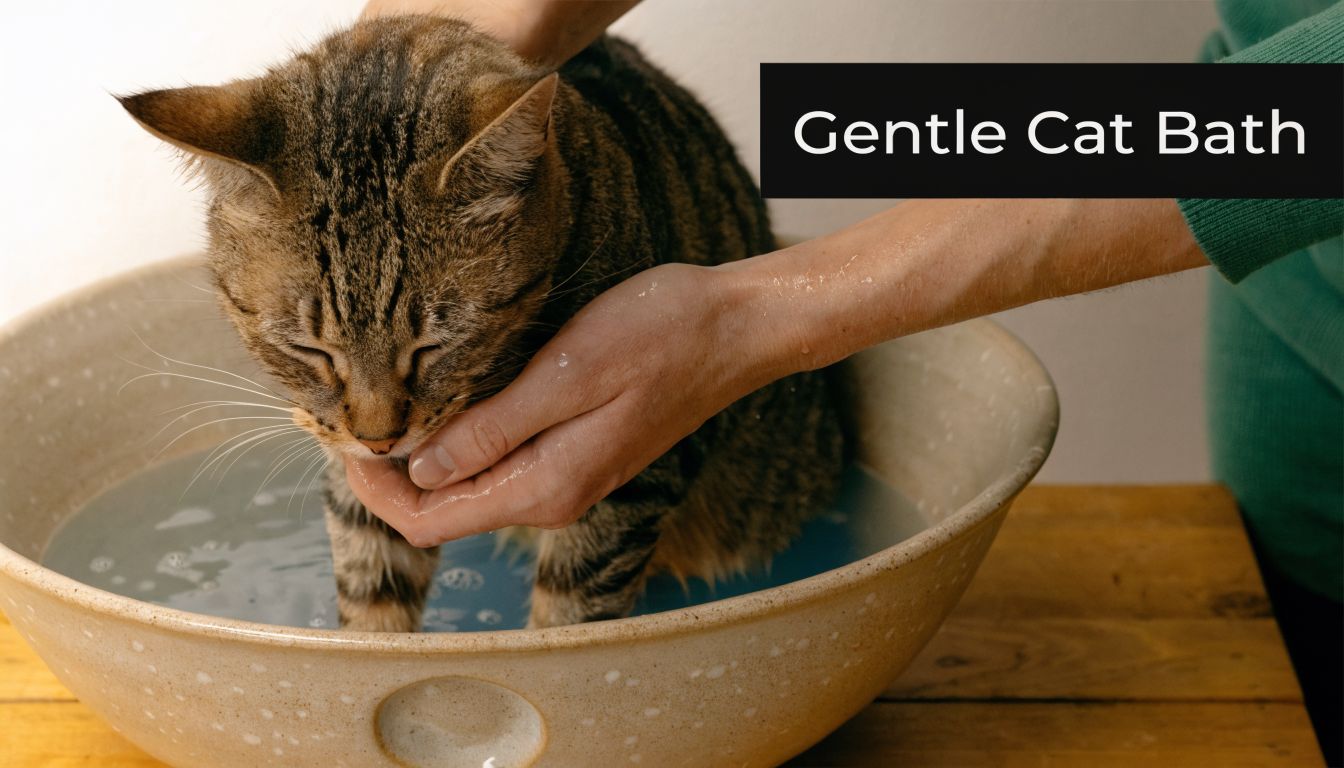
A bath is reasonable when your cat has something on the coat that shouldn’t stay there, can’t be wiped off, and is safe to wash at home. It can also help when a veterinarian has prescribed a medicated shampoo, or when an older cat can’t keep the back half clean anymore.
A bath is not the first answer for routine healthy cats with normal coats. Cats are excellent self-groomers. If your cat suddenly looks greasy, messy, or unkempt all the time, the bigger question may be health, pain, mobility, or behavior. If your cat seems off in general, changes like poor grooming can show up along with other odd behaviors. Owners often notice that pattern when asking why is my cat acting weird.
A calmer bath routine
Set up before bringing the cat in. That one choice changes the whole experience.
Prepare the room first
Put out towels, the cat shampoo, a cup or gentle sprayer, and a non-slip mat. Keep the room warm and quiet.Brush before water
Remove loose fur and small mats first. Water tightens mats and makes everything harder.Use lukewarm water
Not hot. Not chilly. Cats are more tolerant when the temperature feels neutral.Wet only what you need to wet
Start low on the body. Keep water away from the face unless your veterinarian gave you a reason to clean there.Use a small amount of cat shampoo
Apply sparingly and massage gently. More lather doesn’t mean better cleaning.Rinse longer than you think you need to
Residue is the enemy. A cat will lick whatever remains.Towel dry and keep the environment calm
Rubbing aggressively can upset some cats. Pat and wrap instead.
A visual demo can help if this feels intimidating:
When waterless products are the better choice
For anxious cats, spot-cleaning is often the kinder option. Waterless cat shampoos and grooming wipes can help with dirty paws, mild coat buildup, travel accidents, and senior-cat hygiene.
They’re also useful when the stress of a full bath would be greater than the cleaning benefit. That’s especially true for cats who panic around running water.
Use the same standards here as with regular shampoo. It must be made for cats, and the ingredient list still matters. “No-rinse” doesn’t mean “no risk.”
Emergency Guide What to Do If You Used the Wrong Shampoo
If you already used a human shampoo, dog shampoo, or a product with a questionable ingredient, don’t panic. Act quickly and keep the next steps simple.
Warning signs to watch for
Look for changes in the skin, behavior, and nervous system.
- Skin redness or intense itching: Your cat may scratch, twitch the skin, or seem unable to settle.
- Drooling or foaming: This can happen if residue tastes bad or if there’s a toxic reaction.
- Vomiting or lethargy: These signs suggest the problem may be more than surface irritation.
- Tremors, wobbling, or seizures: Treat these as urgent.
- Heavy grooming or sudden distress: Some cats show discomfort by frantic licking or agitation.
If neurological signs appear after a shampoo or flea wash, assume it’s urgent until a veterinarian tells you otherwise.
Two steps to take right away
Rinse your cat thoroughly with lukewarm water
The goal is to remove as much product as possible. If a veterinarian or poison professional advises it for a topical exposure, a mild dish soap may be used as an emergency-only exception to help remove the substance. This is not a routine bathing substitute.Call your veterinarian or an animal poison control service immediately
Have the bottle with you when you call. Read the exact product name and ingredient list. That information matters more than your guess about what happened.
If your cat seems weak, trembly, unusually quiet, or starts drooling heavily, don’t wait to “see if it passes.” Leave for urgent veterinary care.
Frequently Asked Questions About Cat Shampoo
The pet shampoo market reached USD 3.40 billion in 2024, and the cat segment is projected to grow at 5.2% CAGR, according to Grand View Research’s pet shampoo market overview. That growth makes one thing obvious. Owners are paying more attention to species-specific grooming, and that’s a good shift.
Can I use baby shampoo on my cat
Usually, no. Baby shampoo may sound mild, but “mild for human babies” is not the same as “appropriate for feline skin.” The problem is still species mismatch. If it wasn’t made for cats, skip it.
Is Dawn dish soap okay for regular cat baths
No. It’s an emergency-cleanup tool, not a routine grooming product. In a poison-exposure situation, a veterinarian may tell you to use it once to help remove a topical substance. For ordinary bathing, it’s too harsh.
Can I use dog shampoo if it says gentle
No. “Gentle” is not enough. Dog shampoos can contain ingredients that aren’t safe for cats, especially flea formulas. Species matters more than the adjective on the bottle.
Is human dry shampoo safe for cats
No. Human dry shampoos aren’t made with feline grooming behavior in mind. Your cat will lick residue from the coat, and the formula also won’t be designed around feline skin needs.
What should I buy instead
Buy a cat-specific, soap-free, pH-balanced shampoo with a simple ingredient list and no unnecessary fragrance load. If your cat has skin disease, dandruff, or chronic itch, ask your veterinarian before trying over-the-counter products.
The short version is this. If you wouldn’t trust the ingredient list after your cat licked it off the fur, it isn’t shampoo safe for cats.
If you want more practical pet-care guides written for real-life moments like this, visit MyPetGuider.com. You’ll find straightforward help for everyday grooming, behavior questions, product decisions, and the small choices that make you a calmer, more confident pet owner.

Leave a Comment