


Cats cannot eat chocolate because it’s toxic to them. The danger comes from theobromine and caffeine, and the risk depends on the type of chocolate, the amount eaten, and your cat’s body size.
If you’re here because your cat licked frosting, chewed a candy wrapper, or stole a bite of brownie, take a breath. Panic is normal, but chocolate exposure doesn’t always mean the same level of emergency. A tiny smear of milk chocolate and a chunk of baking chocolate are not equal problems, and that difference matters.
Most cat owners get stuck on one question: “How bad is this, right now?” That’s the part many articles skip over. They tell you chocolate is dangerous, list a few symptoms, and leave you guessing. What you need in the moment is a simple way to judge the toxicity level and a short action plan you can follow before your thoughts start racing.
A common scene goes like this. You walk into the kitchen and see a knocked-over dessert plate. Your cat is nearby, grooming calmly, while a piece of chocolate cake is missing its corner. Or you notice your cat licking a truffle wrapper from the trash. Cats often look completely fine at first, which makes the situation more confusing, not less.
This guide is written the way I’d explain it in an exam room. Calmly. Clearly. No scare tactics. You’ll learn why chocolate is toxic, how to think about risk by chocolate type, what signs to watch for, and what to do in the next five minutes if you suspect your cat got into it.
Table of Contents
- Introduction A Moment of Panic
- Why Chocolate Is Toxic to Cats
- How Much Chocolate Is Dangerous for a Cat
- Recognizing the Signs of Chocolate Poisoning
- Your Emergency Action Plan What to Do Right Now
- Prevention and Safe Treat Alternatives
Introduction A Moment of Panic
You hear the crinkle of a wrapper from the living room. By the time you get there, your cat has one paw on the coffee table and there’s a half-open chocolate candy package on the floor. Your mind jumps straight to the worst-case scenario.
That reaction makes sense. Chocolate and pets have a scary reputation, and public awareness tends to focus far more on dogs than cats. The trouble is that cats can still be poisoned, and because they’re small, a modest amount can matter more than people expect.
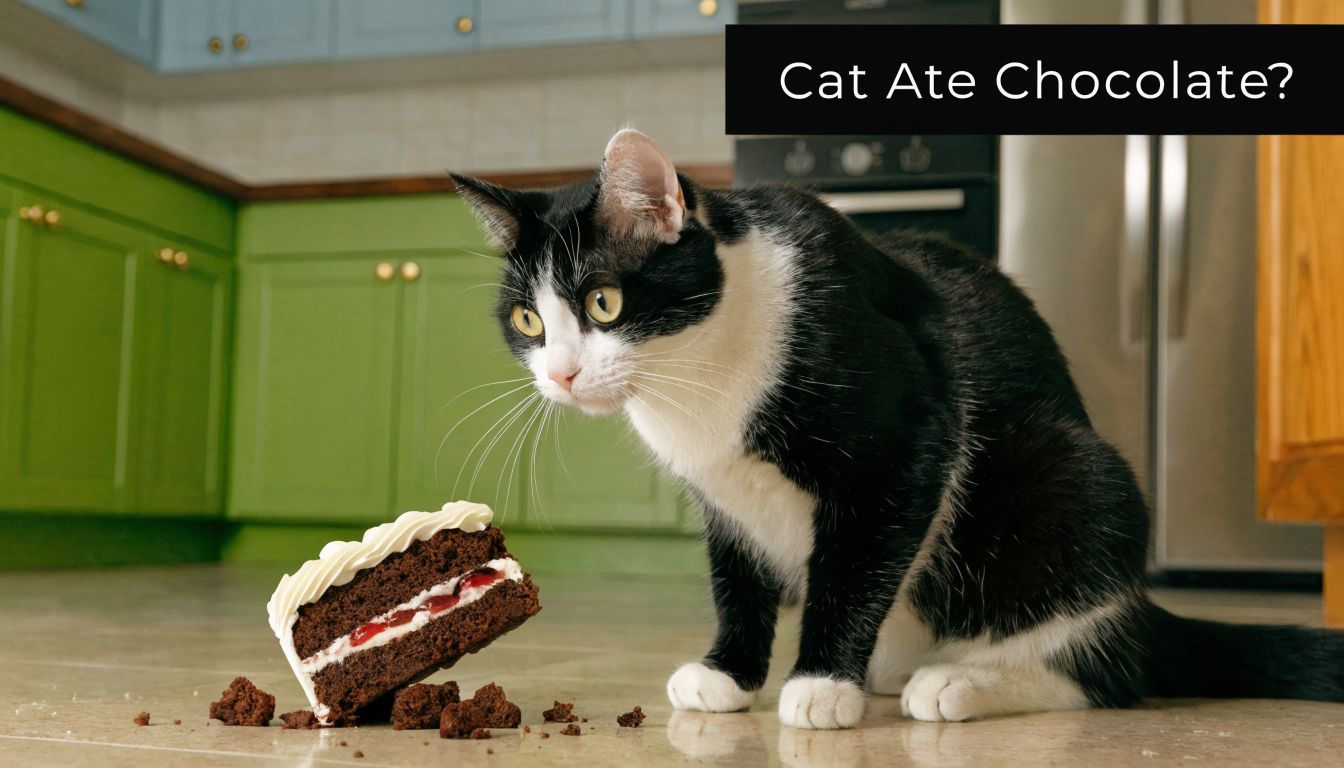
The first thing I want worried owners to know is this: you don’t need to figure out every detail before acting. You only need a few basics. What kind of chocolate was it? About how much is missing? How much does your cat weigh? And when did it happen?
Practical rule: Keep the packaging. The wrapper, box, or dessert label can help a veterinarian estimate risk much faster.
People also get tripped up because “chocolate” covers a huge range. Baking chocolate, cocoa powder, dark chocolate, semisweet chips, milk chocolate, chocolate ice cream, and white chocolate don’t carry the same level of toxic risk. That’s why one cat may need immediate hospital care while another mainly needs monitoring and veterinary guidance.
A visual way to think about it helps. I tell owners to picture a toxicity dial rather than a yes-or-no switch. The darker and more concentrated the chocolate, the higher the dial turns. The smaller the cat, the faster that dial moves.
What matters most in the first few minutes
Focus on these questions before you do anything else:
- Chocolate type: Baking chocolate and dark chocolate are far riskier than milk chocolate.
- Approximate amount: Even a small missing piece can be important in a cat.
- Your cat’s size: A smaller cat reaches a dangerous dose faster.
- Time since ingestion: Recent exposure gives your vet more treatment options.
Once you have those details, your next step becomes much clearer.
Why Chocolate Is Toxic to Cats
Chocolate contains two stimulant compounds that cats handle poorly: theobromine and caffeine. Once swallowed, those chemicals can stay in a cat’s body longer than many owners expect, which gives them more time to irritate the stomach, speed up the heart, and overstimulate the brain.
A useful way to picture it is this. Chocolate can turn up your cat’s internal toxicity level and keep it turned up. In people, the body clears these compounds more efficiently. In cats, the liver processes them sluggishly, so the effects can linger and build instead of fading quickly.
Why cats process it so poorly
Cats are small, and their bodies are not good at breaking down theobromine. That matters because theobromine and caffeine act like stimulants with no reliable off-switch once enough has been absorbed.
The result can show up in several body systems at once. The heart may beat faster than it should. The nervous system may become jumpy or overactive. The digestive tract may react with vomiting, diarrhea, or restlessness. In more serious cases, a cat can develop tremors, seizures, or dangerous changes in heart rhythm.
This is why chocolate poisoning can look bigger than the amount eaten would suggest. A tiny body has less room for error.
Chocolate toxicity is a dose-and-processing problem. Cats may be pickier than dogs, but if a cat does eat chocolate, the same toxic compounds still matter.
Why one chocolate product is worse than another
Different chocolate products sit at very different points on the toxicity level scale. The more cocoa solids a product contains, the more theobromine it usually has. That is why baker’s chocolate, dark chocolate, and cocoa powder raise concern quickly, while milk chocolate is less concentrated.
White chocolate is a separate case. Its theobromine content is much lower, so it is less likely to cause the same stimulant toxicity. Even so, it can still upset a cat’s stomach because of the fat and sugar.
The bottom line is simple. No form of chocolate is a safe treat for cats. If your cat ate any, the next step is to judge the toxicity level based on the type of chocolate and the amount missing, then act quickly if the risk looks more than minimal.
How Much Chocolate Is Dangerous for a Cat
A better way to judge risk is to picture chocolate on a toxicity level scale. The question is not whether your cat ate chocolate. Instead, key factors are what kind, how much, and how big your cat is.
For a typical 8 lb cat, even small amounts can cross into dangerous territory. As a rough guide, concern starts at about 0.2 oz (5.7 g) of baker’s chocolate, 0.5 oz (14.2 g) of dark or semisweet chocolate, or 1.14 oz (32.3 g) of milk chocolate. You do not need a kitchen scale to use this information well. You only need enough detail to sort the situation into low, moderate, or high concern.
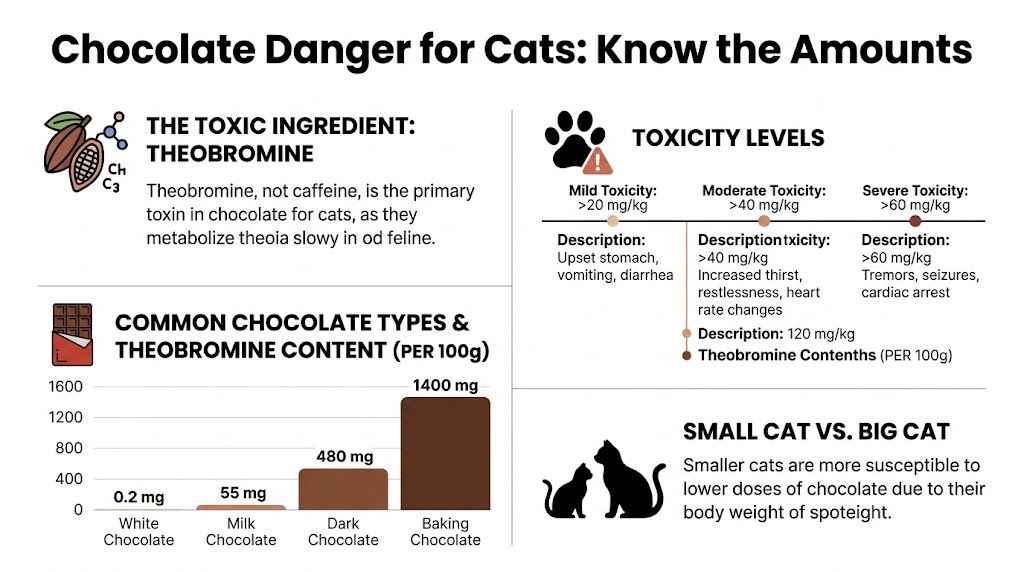
A simple way to read the toxicity level
Use this quick comparison to estimate urgency:
| Chocolate type | General risk level | Why it matters |
|---|---|---|
| Baker’s chocolate | Highest | Very concentrated cocoa content |
| Dark or semisweet | High | Much stronger than milk chocolate |
| Milk chocolate | Lower, but still risky | Less concentrated, but cats are small |
| White chocolate | Different concern | Lower methylxanthine risk, but fat and sugar can still upset the stomach |
A key pattern emerges: the darker the chocolate, the less a cat needs to eat for the situation to become serious.
Cocoa powder sits near the top of the danger scale too. It looks light and harmless, but it works like a concentrated packet of the toxic part of chocolate. A spill of baking cocoa or brownie batter can be more concerning than a larger bite of a milk chocolate candy.
Real-world examples that help
Human eyes often judge by portion size. Cat medicine judges by concentration and body weight.
A thin shaving from a baker’s chocolate bar can matter more than a larger lick of milk chocolate icing. A few dark chocolate chips may deserve more concern than a bigger smear of a lighter chocolate dessert. That is the point of the toxicity level idea. It gives you a faster visual check when you are stressed.
If your cat ate baking chocolate, dark chocolate, or cocoa powder, treat the situation as urgent even if the missing amount looks small.
White chocolate is different, but it is not a free pass. It is less likely to cause the same stimulant poisoning because it contains far less cocoa solid material. Still, the fat and sugar can trigger vomiting, diarrhea, or general digestive upset, and ingredient mixes in desserts can make things more complicated.
If you are unsure whether your cat’s behavior counts as abnormal, this guide to why your cat may be acting weird after eating something unusual can help you describe what you are seeing clearly when you call your veterinarian.
You do not need a perfect home calculation. You need a calm estimate. Identify the chocolate type, guess the amount eaten as closely as you can, note your cat’s weight, and use that information to place the event on the toxicity level scale quickly.
Recognizing the Signs of Chocolate Poisoning
Symptoms often don’t all appear at once. Many cats start with digestive upset or unusual restlessness, then develop more concerning signs if the dose was high enough.
Clinical progression is dose-dependent. Brookhaven Animal Hospital’s discussion of chocolate poisoning in cats notes that mild signs under 20 mg/kg theobromine include gastrointestinal distress, moderate signs at 20 to 40 mg/kg add cardiovascular problems such as tachycardia, and severe poisoning over 40 mg/kg can lead to tremors, hyperthermia, and seizures, with untreated mortality reaching 10 to 20%.
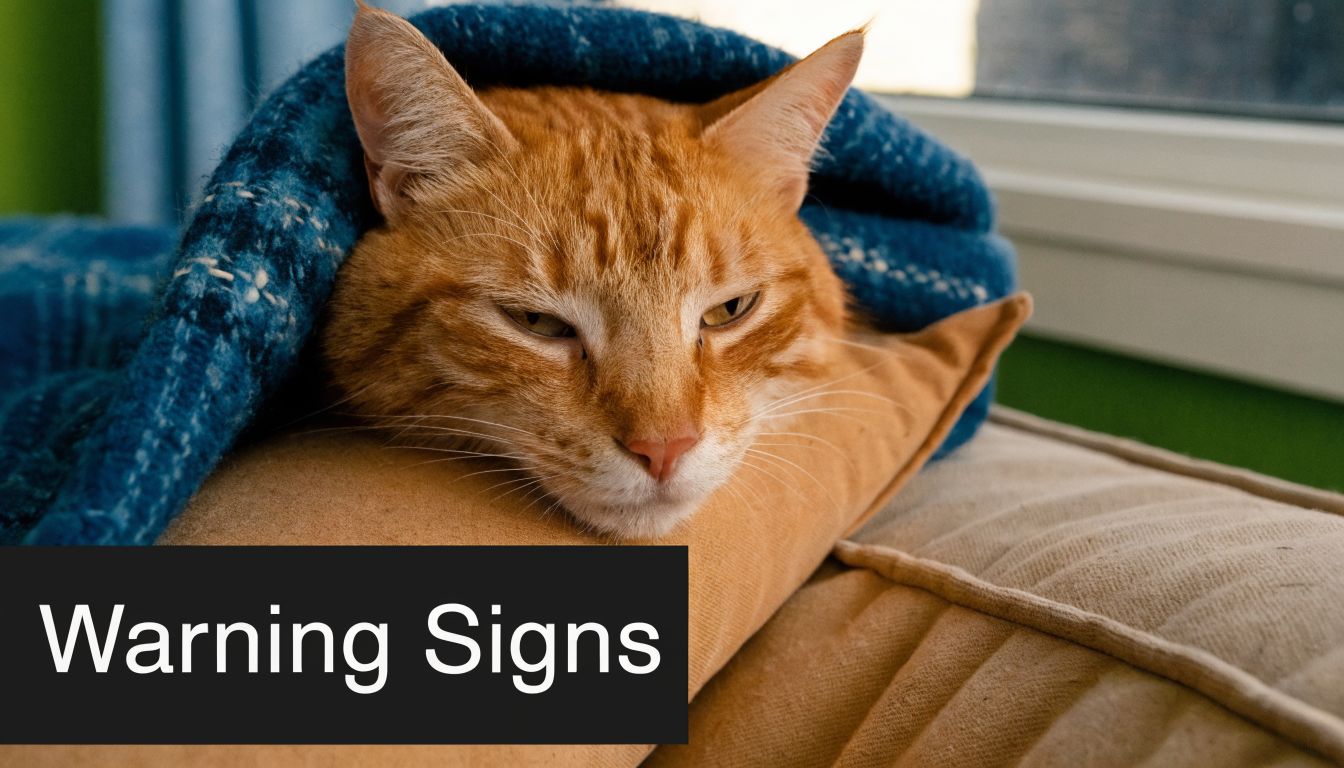
Mild signs
These are often the first clues that something is wrong:
- Vomiting or retching: The stomach is trying to expel an irritant.
- Diarrhea: The intestines can become irritated early on.
- Restlessness: Your cat may seem unable to settle.
- Hyperactivity: Some cats appear unusually alert or agitated.
These signs can be mistaken for a simple stomach upset. If you know chocolate was involved, don’t dismiss them.
Moderate signs
As toxicity rises, the signs often shift from the gut to the heart and nervous system:
- Fast heart rate: The heart may begin racing.
- Increased blood pressure or overarousal: Your cat may seem tense, startled, or unable to relax.
- Rapid breathing: Some cats breathe faster because they’re overstimulated.
If your cat seems “off” and you can’t quite describe it, that still matters. Behavioral change is often how owners first notice a problem. If you’ve seen unusual pacing, agitation, or odd alertness, this guide on why your cat may be acting weird can help you think through what you’re seeing while you contact a veterinarian.
Severe signs
These are true emergencies:
- Tremors
- Seizures
- Very high body temperature
- Collapse or coma
- Serious rhythm disturbances
Don’t wait for severe signs before calling for help. A cat who still looks normal can worsen as absorption continues.
Timing can be confusing too. Some signs can appear within hours, while others build as the toxins circulate. That’s why “she seems okay right now” isn’t a reliable reason to relax after a known ingestion.
Your Emergency Action Plan What to Do Right Now
If you think your cat ate chocolate, don’t spend the next hour searching forum posts. Use the next five minutes well.

Your 5 minute checklist
Move the chocolate away. Pick up the wrapper, plate, or spilled ingredients so your cat can’t eat more.
Keep your cat quiet and contained. Put your cat in a calm room or carrier. Excitement can make stimulant effects harder on the body.
Identify the product. Check whether it was baking chocolate, dark chocolate, semisweet chips, milk chocolate, cocoa powder, or a dessert made with chocolate.
Estimate the amount missing. Don’t aim for perfection. A rough estimate is still useful.
Call for help immediately. Chimacum Valley Veterinary Hospital’s guidance on chocolate ingestion in cats notes that if ingestion was less than 2 hours ago, a vet may induce vomiting or use activated charcoal at 1 to 2 g/kg, and owners can call the ASPCA Animal Poison Control Center at (888) 426-4435 for immediate guidance. That same source notes symptoms can last 24 to 96 hours because cats metabolize the toxins slowly.
What not to do
Do not guess that “a little bit won’t hurt” and wait until morning.
Don’t offer food to “dilute” the chocolate. Don’t give random home remedies. And don’t induce vomiting unless a veterinary professional has specifically told you to do so and explained how. Cats are not small dogs, and home treatment can go wrong quickly.
Have the package beside you when you call. Ingredient list, chocolate type, and missing amount are often more helpful than a long explanation.
A digestive support product can be useful later in some stomach upset cases, but it is not first aid for toxin exposure. If your vet later talks with you about gut recovery after the immediate crisis has passed, this guide to the best probiotic for cats may be helpful for follow-up questions.
Here’s a short visual walkthrough if you do better with spoken guidance:
What your vet may do
Treatment depends on what was eaten, how much, and how recently. If the exposure was recent, your vet may try to remove the toxin before more is absorbed. In more serious cases, cats may need monitoring, fluids, and medication to control heart rhythm changes or neurologic signs.
Your job at home is simple. Act early, stay calm, and hand over accurate information. You do not need to diagnose the toxicity level perfectly. You only need to recognize that chocolate and cats are a combination worth treating seriously.
Prevention and Safe Treat Alternatives
The easiest chocolate poisoning case is the one that never happens. Most cats aren’t drawn to cocoa itself, but many are interested in the fatty, creamy parts of human desserts. That’s why chocolate ice cream, whipped toppings, chocolate cereal milk, and dessert plates left on a coffee table can become problems.
Purina’s article on whether cats can eat chocolate notes that cats are often tempted by milk-based chocolate treats like ice cream because of the creaminess, not the cocoa, and that 15% of households share human snacks with pets. The same source recommends secure storage for high-risk items like baking chocolate and suggests cat-safe distractions like lick mats during family dessert time.
Household risks people miss
These are the exposures I see owners overlook most often:
- Baking ingredients: Cocoa powder and baking bars left out during holidays or weekend baking.
- Trash access: Wrappers, brownie paper, and candy bags in open bins.
- Shared desserts: Children offering “just a taste” of ice cream or cake.
- Coffee table spills: Hot cocoa, chocolate milk residue, or dripped syrup.
A lidded trash can and high cabinet do more good than one might think. Prevention is rarely fancy. It’s mostly about removing opportunity.
Better ways to give a special treat
If you like including your cat in family routines, create a separate cat ritual instead of sharing your dessert. A lick mat with a vet-approved cat treat, a small portion of their usual wet food, or a cat-safe topper works better than offering bites from your plate.
For older cats or cats with changing appetites, choosing the right safe treat matters even more. If you’re trying to make snack time both appealing and appropriate, this guide on what to feed an older cat that is losing weight can help you think beyond human foods.
The safest rule is simple. If it’s a chocolate product, it isn’t for cats.
One final point often reassures people. A scare can make you feel guilty, but most prevention starts with small changes. Put baking chocolate away immediately after use. Wipe up drips. Keep candy out of reach. Teach kids that cats don’t get chocolate, even as a joke or a “tiny treat.” Those habits lower the odds of another frantic moment in the kitchen.
If you want more practical, plain-English pet care help, visit MyPetGuider.com. It’s a useful place to find step-by-step guides, feeding advice, and everyday care tips that help you make calmer, smarter decisions for your cat.



Leave a Comment