

You notice it when your dog jumps onto the couch and the smell follows a second later. Maybe it’s a damp-coat odor, maybe it’s fishy breath, maybe it’s that stale, oily smell that seems to come back even after a bath. Most owners hit the same point: “I clean my dog, so why does my dog still smell?”
The good news is that dog odor is usually solvable. The better news is that how to make dog smell better gets much easier once you stop treating every smell like the same problem. A muddy-paw smell needs a fast surface fix. A greasy coat needs a better grooming routine. Bad breath, recurring ear odor, and strong body odor often need a root-cause approach.
I look at smell in tiers. First, get the odor under control right now. Then clean thoroughly and correctly. After that, deal with what’s causing it so the smell doesn’t keep coming back.
Table of Contents
- Why Your Dog Smells and What You Can Do
- Quick Fixes for Immediate Odor Relief
- The Ultimate Bathing and Grooming Routine
- Targeting Odor from the Inside Out
- Keeping Your Home and Gear Fresh
- When a Bad Smell Signals a Bigger Problem
- Frequently Asked Questions About Dog Odor
Why Your Dog Smells and What You Can Do
You let your dog onto the couch, and within a few minutes the whole spot smells musty, sour, or oddly fishy. That kind of odor usually has a source you can track. Once you know where it starts, the fix gets much easier.
A normal dog smell stays close to the coat and fades into the background. A stronger odor that fills a room, sticks to your hands after petting, or returns right after cleaning points to a specific problem. In practice, I sort it by urgency first, then by cause. If the smell is sudden or strong, get quick relief in place. If it keeps coming back, look at grooming, mouth and ears, diet, skin health, and the dog’s living space.
Start with a simple check. Get close and smell one area at a time instead of judging the whole dog at once.
- Coat and skin: musty, oily, dirty, or damp smell
- Mouth: sour, rotten, or unusually strong breath
- Ears: yeasty, stale, or sharp odor
- Paws: damp, cheesy, or corn-chip smell
- Rear end: fishy or fecal odor
- Bed, collar, harness, crate: stale fabric smell that transfers back to the dog
This quick test matters because the same bad smell can come from very different causes. A wet-dog odor often points to trapped moisture in the coat. Greasy, stale odor tends to build from oil, dead hair, and undercoat that is not being removed well. Fishy smell around the rear can be anal gland related. Yeasty ears and sour skin folds often need more than better shampoo.
Covering the smell rarely works for long.
The goal is to match the solution to the source. Surface odor calls for fast cleanup. Recurring odor calls for a better routine. Breath, ear, skin, or fishy odors can signal a health issue that needs attention before any grooming product will make a real difference.
A practical rule helps here: ask where the smell is coming from, how fast you need it under control, and whether it keeps returning after cleaning. Those three questions usually tell you whether you need a quick freshen-up, a deeper grooming reset, changes inside the body, or a vet visit.
Quick Fixes for Immediate Odor Relief
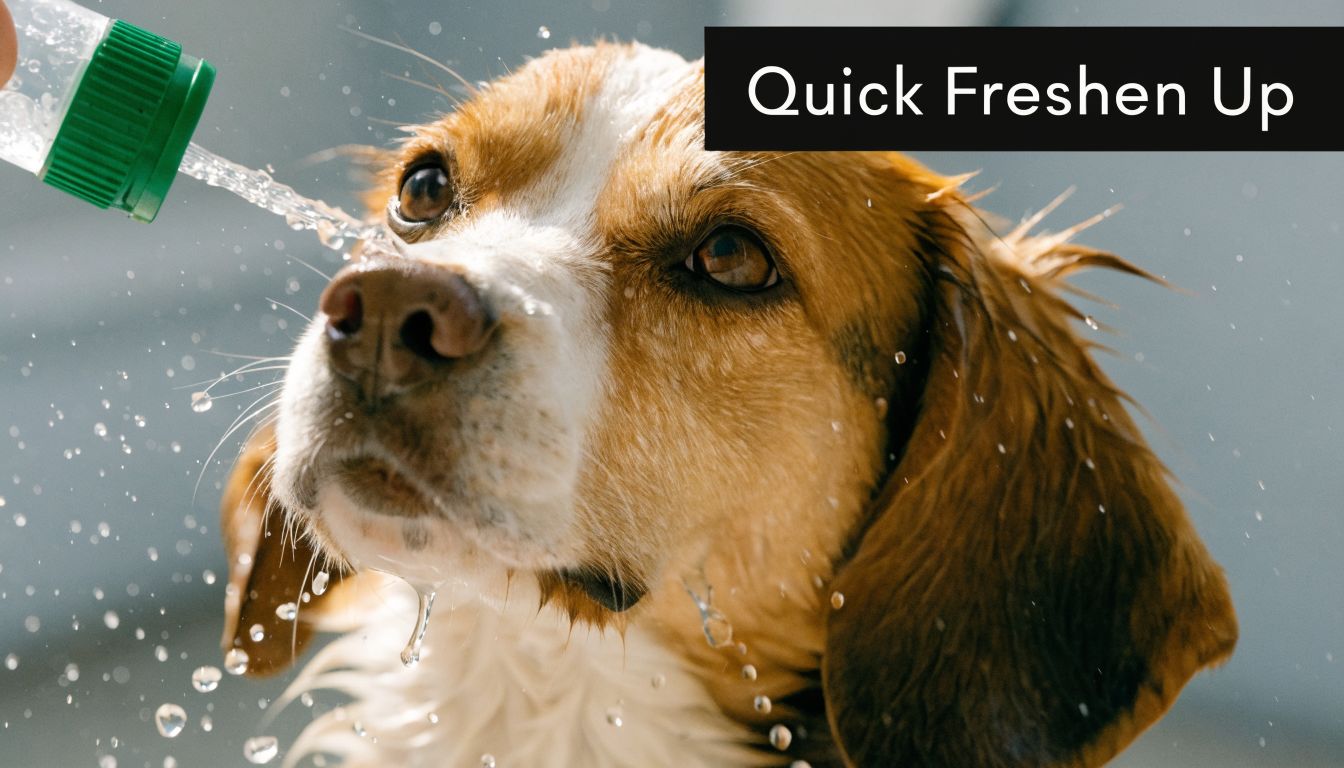
If your dog smells bad and guests are on the way, skip the full bath unless you have time to dry the coat completely. Half-done bathing often makes the smell worse. For fast improvement, use products that remove surface grime and dilute odor without soaking the dog.
Use wipes where odor starts
Heavy-duty grooming wipes are the fastest option for paws, muzzle, under the tail, and skin folds. They’re useful after walks, daycare, or meals. I’d look for dog wipes with aloe or oatmeal and no alcohol, because harsh formulas can dry the skin and leave a stronger smell a day later.
A good wipe-down order is simple:
- Paws first: Dirt and outdoor residue travel everywhere.
- Face and beard area: Especially on drooly dogs.
- Armpits and groin: These spots hold moisture.
- Rear end: Only with a fresh wipe.
- Skin folds: Gently, without scrubbing hard.
If your dog has a wrinkled face or short muzzle, open the folds fully and dry them after wiping. Moisture left behind is part of the problem.
Reach for waterless shampoo between baths
Dry shampoo foams and no-rinse mousses work best on dogs with a stale coat smell rather than actual grime. Massage the product into the coat, let it sit briefly, then towel off and brush through. This works well for older dogs who hate frequent baths, dogs that aren’t fully dirty, and cool-weather cleanup when you don’t want a wet coat hanging around.
A few product-type rules matter:
| Situation | Best quick fix | What to avoid |
|---|---|---|
| Muddy paws | Grooming wipes or paw wash cup | Spraying perfume on top |
| General muskiness | Waterless shampoo foam | Overloading the coat with oils |
| Bedding or crate smell | Pet-safe deodorizing spray on fabric | Spraying the dog and bed heavily at once |
| Facial folds | Unscented wipes, then dry cloth | Strong fragrance products |
A deodorizing spray should be the finishing step, not the main cleaning step.
Spray lightly, then brush
Pet-safe deodorizing sprays can help after brushing or after a wipe-down, but don’t soak the dog in scent. One or two light passes across the body, then a quick brush, works better than trying to perfume away a dirty coat.
Short-haired dogs often do best with a rubber curry brush after a spray. Long-coated dogs usually need a slicker brush or comb to move product through the topcoat and keep it from sitting on the surface.
If the smell returns within hours, that’s your sign to stop doing cosmetic fixes and move to a deeper clean.
The Ultimate Bathing and Grooming Routine
Your dog comes in from a bath smelling clean, then an hour later that damp, sour odor is back on the neck, ears, or chest. In the grooming room, that usually points to one of four problems. The coat was not brushed out first, the shampoo did not reach the skin, residue stayed behind, or the dog dried on the surface while the undercoat stayed wet.
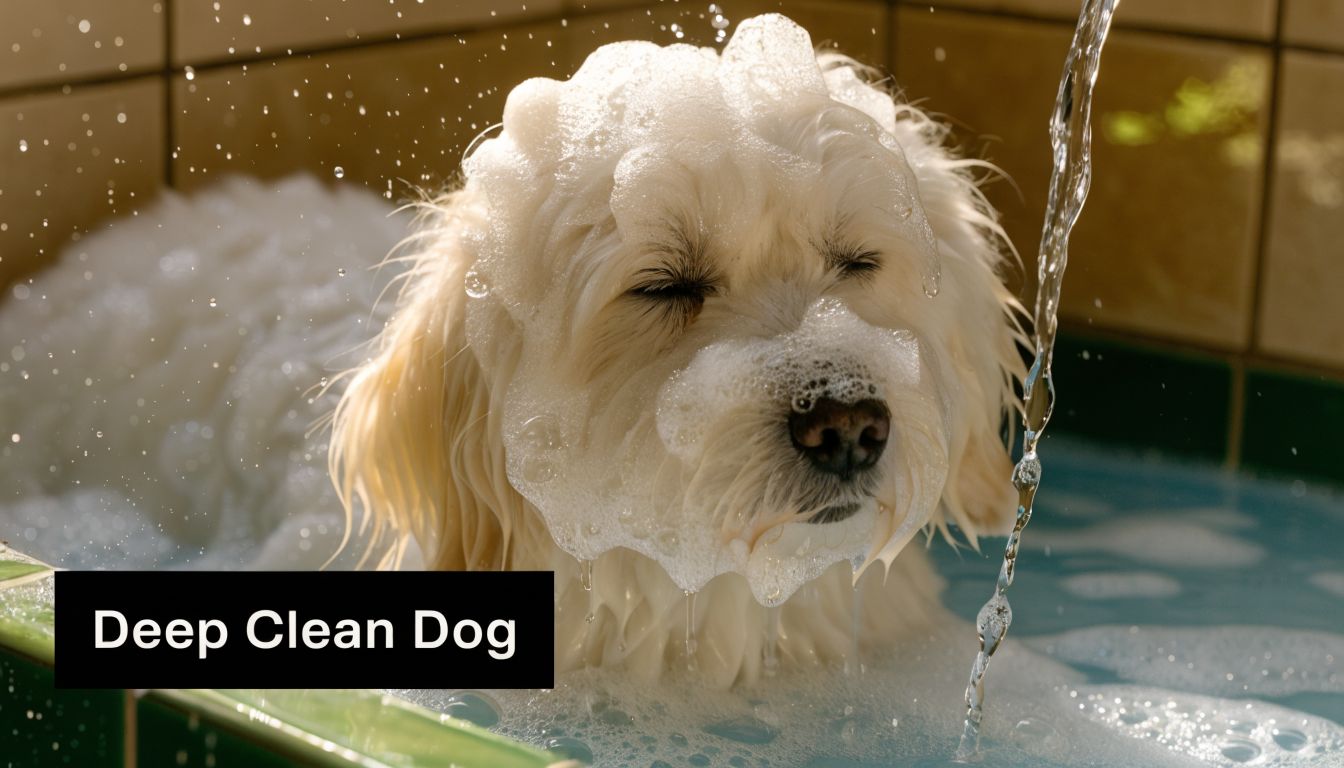
A good routine works in tiers. Start with coat prep, move to a true skin-level wash, then finish with full drying. If odor still returns fast after that, stop treating it like a grooming issue alone and start looking for a medical or environmental cause.
Start before the water runs
Brush first. Wet hair tightens tangles, traps shed coat, and makes odor harder to remove. Owners often assume shampoo will loosen everything up. It usually does the opposite.
Use the tool that fits the coat in front of you:
- Short coat: Rubber curry or grooming mitt
- Double coat: Undercoat rake plus slicker brush
- Long silky coat: Pin brush, then comb
- Curly coat: Slicker brush and metal comb, section by section
Slow down around the neck, tail base, rear, armpits, and behind the ears. Those spots collect oil and hold moisture longer than people expect.
Wrinkly and flat-faced dogs need one more step. Skin folds around the face, lips, tail pocket, and vulva can hold moisture and debris even when the rest of the dog looks clean. A recent veterinary study cited in a Chewy article on dog odor found that brachycephalic dogs have a higher rate of odor-related skin problems because moisture gets trapped in folds. For these dogs, routine grooming includes gently cleaning and fully drying those creases every time.
On wrinkly dogs, a clean coat does not mean a clean skin fold.
For breed-specific grooming habits and routine comparisons, many owners also check guides on MyPetGuider.
Wash in a way that removes odor instead of masking it
Use lukewarm water and take time to fully soak the coat before shampoo touches the dog. Thick coats can repel water at first, so the soap ends up sitting on the hair instead of cleaning the skin where the odor starts.
Then wash with a plan.
- First lather: Loosen oil, dirt, saliva, and outdoor residue.
- Second lather: Clean closer to the skin, especially on greasy areas.
- Protect the ears: Keep water out of the ear canal.
- Match the shampoo to the problem: Oatmeal or sensitive-skin formulas for dry skin, deodorizing shampoo for oily coats, puppy shampoo for young dogs.
Human shampoo causes trouble fast. It strips the skin, adds heavy fragrance, and often leaves a dog itchier a day later. If the coat feels waxy or greasy, use your fingertips to work the shampoo down to the skin instead of pouring on more product.
This is also the best time for a hands-on skin check. Run your fingers under the collar line, through the groin, under the chin, and behind the ears. Redness, thick skin, scabs, excess oil, ear debris, or a yeasty smell usually mean the odor has a cause that bathing alone will not fix.
This video gives a helpful visual on bathing basics and handling:
Drying is where many owners lose the battle
That classic wet-dog smell usually means moisture stayed trapped close to the skin. I see it most often on double-coated dogs, thick doodle coats, and dogs with dense neck ruffs.
Use a simple sequence and finish the job all the way through:
- Blot with absorbent towels and press into the coat instead of only rubbing the top.
- Switch towels once they are damp so you are not spreading moisture back around.
- Brush while drying to open the coat and let air reach the skin.
- Use a dryer on a safe, low-heat setting if your dog tolerates it.
- Dry ears, feet, and folds last and carefully because those are common odor holdouts.
There is a trade-off here. Bathing more often can help a dirty dog, but frequent baths with poor rinsing or incomplete drying can keep the smell cycle going. A dog that is bathed well every few weeks will usually smell better than a dog that gets rushed baths twice as often.
Targeting Odor from the Inside Out
Some dogs smell bad because they’re dirty. Others smell bad because their body is producing odor from the inside. When the coat gets oily fast, the gas is strong, or the breath is consistently unpleasant, I stop focusing on shampoo and start looking at food, teeth, and digestion.

Food quality changes body odor
Diet can change how a dog smells all over. Low-quality food often shows up as stronger gas, heavier stool odor, a dull coat, or a greasy feel on the skin. In contrast, Tractive’s guidance on improving dog odor states that switching to a high-quality diet rich in meat content and incorporating probiotics can achieve up to a 70-80% improvement in a dog’s overall scent within 4-6 weeks.
That doesn’t mean every expensive food is good and every budget food is bad. It means ingredients matter. I’d prioritize a clearly named meat source, simpler formulas, and a slow transition so you can tell whether the food is helping.
A practical way to judge whether the diet is helping:
| Sign | What it may suggest |
|---|---|
| Less gas | Better digestion |
| Firmer stool with less odor | Food is agreeing with the dog |
| Less oily coat | Skin may be settling down |
| Reduced “doggy” smell between baths | Internal odor load is improving |
Bad breath is often a mouth problem, not a shampoo problem
Owners sometimes try to fix bad breath with treats alone. That rarely does enough if the mouth is already dirty. Breath odor usually improves when you handle the actual buildup on the teeth and gumline.
The simplest routine is consistent:
- Brush with dog-safe toothpaste
- Use dental chews as support, not a substitute
- Check the back teeth, where smell often starts
- Watch for drooling, pawing at the mouth, or visible tartar
If your dog’s body smells fine but the face smells bad up close, focus on the mouth before changing shampoos or coat products.
Brush the teeth you can reach. Consistency matters more than making each session perfect.
Gut support can calm the whole smell profile
Probiotics can help dogs whose odor seems tied to digestion rather than dirt. I’ve found they’re most useful in dogs with chronic gas, inconsistent stool quality, or a smell issue that improves briefly after a bath but returns fast.
Keep expectations realistic. Probiotics aren’t a deodorizer. They support digestion, and when digestion improves, the dog often smells better overall. Pairing them with a better food usually works better than adding a supplement on top of a poor diet.
If you change food and add a probiotic at the same time, make notes each week. Pay attention to stool, coat feel, breath, and how long the dog stays fresh after grooming. That pattern tells you more than scent alone.
Keeping Your Home and Gear Fresh
You finish the bath, the coat smells clean, and by evening the dog smells musty again. That usually means the odor is sitting in the environment and transferring back onto the coat. Beds, crate pads, rugs, blankets, collars, and car fabrics all hold oil, saliva, dander, and damp dog smell.
Start with urgency. If you need the house to smell better today, wash the items your dog touches most and open up airflow in the room. If the odor keeps coming back, treat the home like part of the grooming plan and work through the likely sources one by one.
The bed is often the first place to fix
Dog beds collect body oils fast. They also trap moisture, which is why a bed can smell stronger than the dog lying on it.
Wash bedding on a regular schedule, using the warmest water the fabric allows and drying it fully before it goes back down. If the cover comes off, check the insert too. I replace inserts that still smell stale after washing because some fillings keep odor long after the outside looks clean.
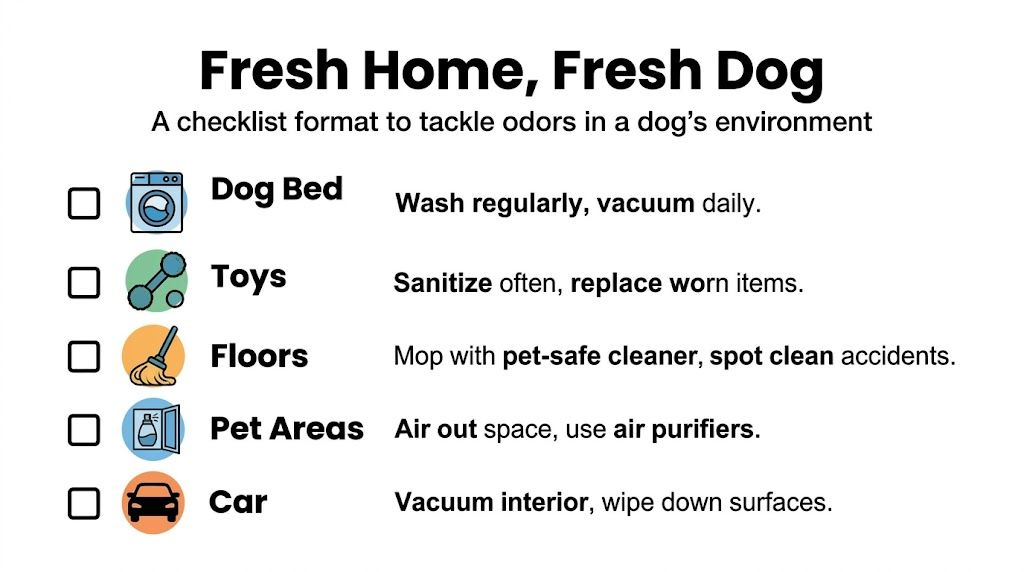
Crate pads, couch throws, and favorite blankets need the same attention. A clean coat does not stay fresh for long on dirty fabric.
For more practical pet-care routines, many owners use the MyPetGuider blog library for simple checklists and upkeep ideas.
A simple cleaning map for the rest of the house
Go after the highest-transfer items first.
- Collars and harnesses: These are easy to miss and often smell stronger than the coat. Wash fabric gear, wipe waterproof gear, and let everything dry fully before putting it back on.
- Toys: Plush toys should be washed often. Rubber toys need a good scrub, especially in grooves. Rope toys hold saliva and can stay sour even after cleaning, so replace them once the smell lingers.
- Floors and rugs: Clean the spots where your dog sleeps, eats, shakes off, and comes in from outside. Rugs near doors and crates tend to hold the last stubborn odor.
- Furniture: Vacuum first. Then clean the fabric only with a product the material can handle. Test a hidden spot before treating the whole cushion.
- Car interior: Dog smell builds up fast in seat seams, cargo liners, and fabric door panels. Vacuum hair out, wipe hard surfaces, and wash removable covers.
A short maintenance routine usually works better than an occasional full-house scrub. Wipe paws after walks. Launder the bed before it smells obvious. Clean gear on the same schedule as the bath, or even sooner for dogs that swim, drool, or have oily skin.
If the dog smells clean but one room still does not, get low and sniff near crate corners, under furniture, and along rug edges. That is where old accidents, damp fabric, and trapped dog oil usually show up.
When a Bad Smell Signals a Bigger Problem
Some smells don’t need another bath. They need a veterinarian. If an odor is sharp, unusual, or paired with redness, discharge, licking, scratching, pain, or behavior changes, don’t try to solve it with wipes and sprays.
A few examples deserve quick attention:
- Sweet or fruity breath: This can point to a metabolic issue. Call your veterinarian promptly.
- Urine-like breath or body odor: This can be associated with internal illness and shouldn’t be treated as a grooming problem.
- Fishy smell from the rear: Anal gland trouble is common and usually needs proper assessment.
- Musty or yeasty odor from ears or skin: This often suggests infection or overgrowth, especially if there’s redness, debris, or itching.
- Sudden foul mouth odor: A broken tooth, infected tooth, or advanced dental disease can produce a strong smell fast.
What matters most is the pattern. If the smell is isolated to one body area and keeps returning despite good hygiene, that’s a clue. If your dog seems uncomfortable, that’s a bigger clue.
Don’t put medicated human products, essential oils, powder, or random home remedies on irritated skin or in the ears. That can muddy the picture and sometimes make the problem worse before the vet sees it.
When owners ask me whether they should “wait a few days,” my rule is simple. If the odor is new, strong, and clearly abnormal for your dog, make the appointment.
Frequently Asked Questions About Dog Odor
What’s the best way to get rid of skunk smell?
Use a dog-safe de-skunk product as soon as possible, and keep it out of the eyes and ears. Don’t soak the dog in random household products without checking that they’re safe for dogs. Wash collars, harnesses, and any fabric the dog touched right away, because skunk odor transfers easily.
Can I use human shampoo or baking soda on my dog?
Human shampoo is a bad idea for routine use. It can dry the skin and create a rebound odor problem. Baking soda is also not my first choice on the dog’s body because it can be messy, irritating, and easy to overuse. Stick to dog-formulated shampoos, wipes, and sprays instead.
Why does my dog smell worse after a bath?
Usually because the coat stayed damp, shampoo residue was left behind, or the odor source wasn’t the coat in the first place. Ears, mouth, skin folds, bedding, and anal gland issues are common reasons owners think the bath “didn’t work.”
How often should I freshen my dog between baths?
As needed, but gently. Wipes for paws and folds, brushing for loose coat and dander, and light deodorizing on bedding are usually enough between baths. If you’re doing heavy odor control every day, the dog likely needs a better root-cause plan.
If you like practical pet-care guidance and easy routines you can use, subscribe through MyPetGuider updates and keep fresh tips coming.
MyPetGuider.com shares straightforward pet-care advice for everyday owners who want clear answers without fluff. Visit MyPetGuider.com for practical guides, checklists, breed insights, and product comparisons that help you care for your dog with confidence.

Leave a Comment